



A watch movement has been carefully cleaned and is ready for assembly. At this stage, it is essential to prevent dust from reaching the delicate components. Even a single foreign particle in a critical area or a fine fibre beneath the watch crystal can make additional cleaning necessary. In professional watchmaking, a controlled working environment is therefore an important part of quality assurance.
Laminar flow systems and cleanroom workstations help reduce the risk of such contamination. They supply the work area with filtered air, creating better conditions for delicate assembly and servicing tasks. But how does this technology work, and what should you consider when choosing a suitable clean air workstation?
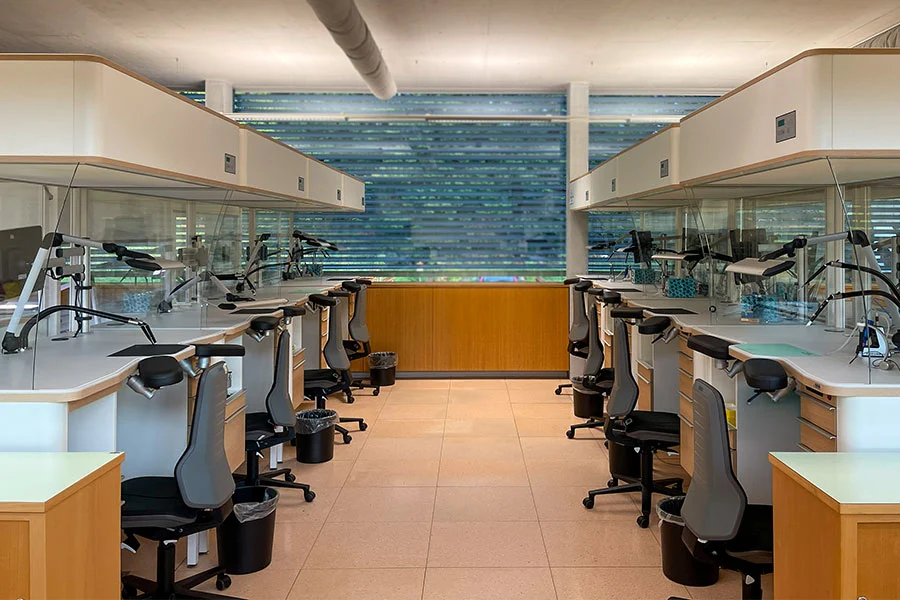
The key points at a glance
- Targeted dust protection: Laminar flow reduces exposure to airborne particles and helps protect delicate watch movement components from contamination.
- High-performance filtration technology: According to product specifications, BenchTech uses HEPA H14 main filters and offers systems for cleanliness requirements up to ISO Class 3 in accordance with ISO 14644-1.
- Thoughtful workstation planning: In addition to filtration performance, airflow management, the positioning of tools and equipment, and ergonomics are crucial.
- Customized cleanroom solutions: BenchTech offers four Laminar-ONE model variants, various designs, and custom adaptation options.
- Personal project support: Specialists provide support with planning, technical design, installation, and commissioning.
How does laminar flow work in watchmaking?
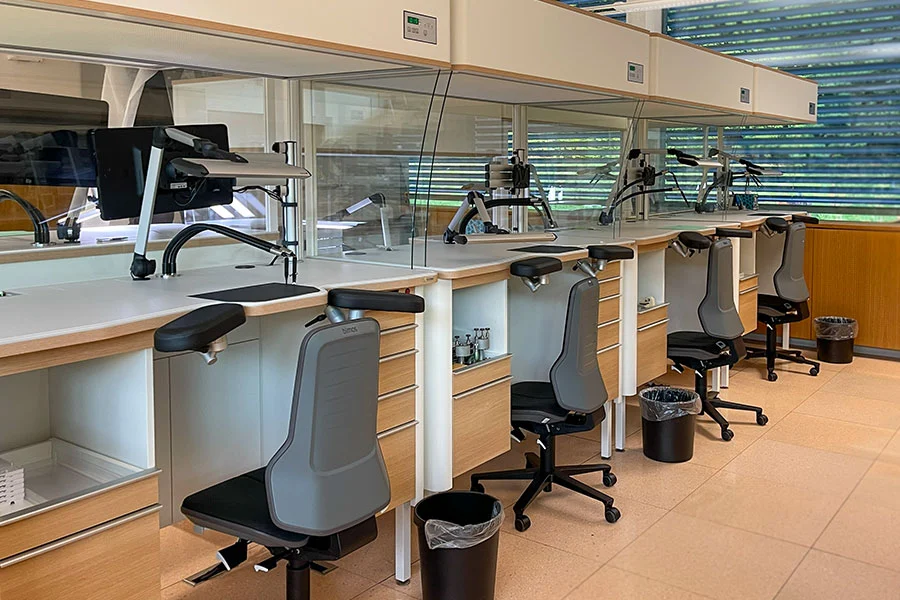
In clean air workstations, laminar flow refers to an airflow that is as uniform and unidirectional as possible. Air is drawn in, purified through high-performance filters and directed through the protected work area in a controlled manner. This helps carry airborne particles away from the work zone, reducing the risk of them settling on delicate components.
Minimising particle contamination is particularly beneficial when working with open watch movements and components that have already been cleaned. It can help avoid additional cleaning and disassembly work while maintaining consistent conditions during demanding assembly processes. However, laminar flow does not guarantee a completely dust-free environment. Tools, clothing and materials can also introduce contaminants directly into the work area.
HEPA H14 filters and ISO cleanliness classes: What matters most?
According to the product description, BenchTech’s laminar flow systems are equipped with HEPA H14 main filters. Filters in this class achieve a minimum overall filtration efficiency of 99.995% at the most penetrating particle size (MPPS), in accordance with the European standard EN 1822. This filtration performance provides an important foundation for supplying purified air.
The international standard ISO 14644-1 is used to classify air cleanliness. It defines cleanliness classes based on the concentration of airborne particles. According to BenchTech, its laminar flow systems meet requirements up toISO Class 3 in accordance with ISO 14644-1. The cleanliness class that can be verified for a specific installation depends on the system configuration and testing conditions.
When selecting a clean air workstation, the highest achievable cleanliness class is therefore not the only deciding factor. What matters most is understanding the conditions required for the specific work process and how these can be achieved at the workstation.
What should you consider when planning a clean air workstation?
A high-quality filter alone does not guarantee an optimal clean air workstation. In watchmaking, microscopes, magnifying lamps and tool holders are often positioned directly above or beside the workpiece. Depending on their position, these devices can interfere with the directional airflow and cause local turbulence. It is therefore important to establish which tasks require protection, where the delicate components are positioned and which equipment is needed during the work process before selecting a suitable system.
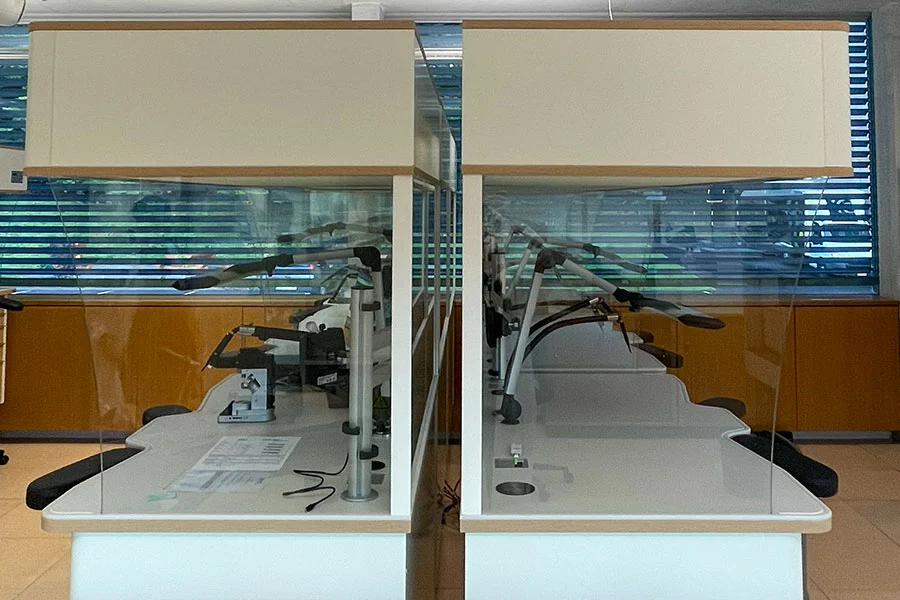
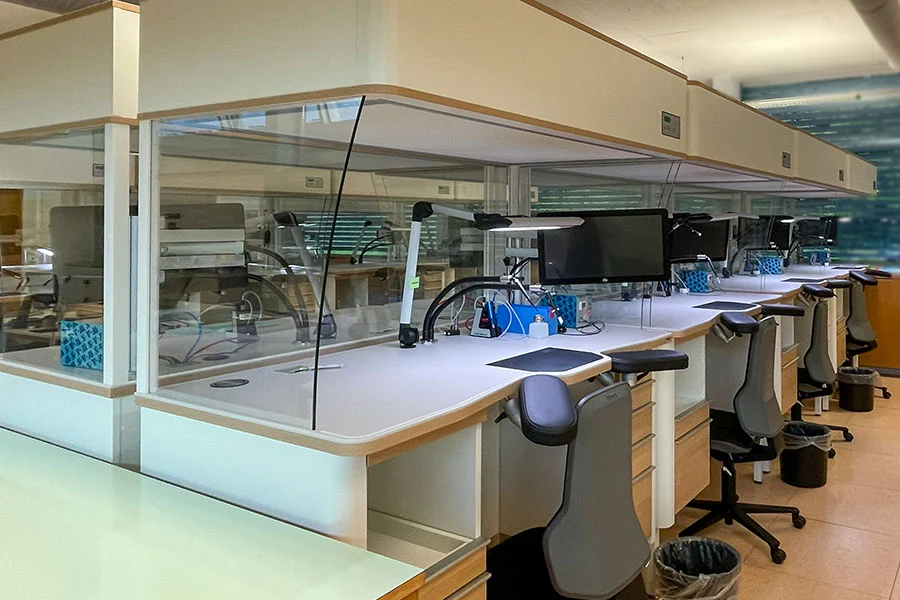
These requirements determine important criteria for the size and design of the protected work area. Available space, freedom of movement and an ergonomic working posture should also be taken into account. Quiet operation and easily accessible surfaces for cleaning and maintenance are further important considerations. Particularly when integrating a clean air system into an existing watchmaker’s bench, it is worth coordinating the equipment layout and intended airflow at an early stage.
Clarifying these questions before purchasing provides a solid foundation for selecting a clean air solution that meets the demands of everyday precision work.
Checklist: Planning the right clean air workstation
What cleanliness requirementsneed to be met? How much spaceis available, and which equipmentneeds to be integrated? Our compact checklist helps you address seven important questions before purchasing a clean air workstation. It allows you to identify your requirements systematically and prepare effectively for the next stages of planning.
What laminar flow solutions does BenchTech offer?
The requirementsfor a clean air workstation vary depending on the tasks performed, equipment used and working environment. With its Laminar ONE range, BenchTech offers four model variants with different structural and design features.
| Model | Key features |
|---|---|
| Laminar ONE Light | Compact flow box with a frameless glass design and quiet operation. Ideal for larger, busy work areas. The all-round glass enclosure reliably protects the worktop from dust and particles. |
| Laminar ONE | Flowbox mit Aluminiumrahmen für eine saubere Arbeitsumgebung direkt am Werktisch + gleiche Vorteile wie ONE Light |
| Laminar ONE UNIQUE | Design with glass panels and an elegant wooden frame |
| Laminar ONE Flex | Modulare Flowbox auf zwei Säulen mit flexiblen Erweiterungsmöglichkeiten. Wahlweise teilverglast oder komplett offen. Ideal für Ateliers mit bereits geringer Partikelkonzentration in der Raumluft. (Grauraum / Weissraum) |
The most suitable version depends on more than just the design. Key considerations include the required worktop space, existing equipment, available spaceand air cleanliness requirements. In addition to standard sizes, BenchTech therefore offers custom-made solutions. According to the product description, dimensions, colours and technical equipment can be tailored to individual customer requirements.
Whether you need a compact benchtop unit, an integrated solution for an existing workstation system or a standalone cleanroom workstation, the different configurations allow clean air technology to be incorporated into the design of a new workstation or its integration into existing systems to be explored.
This is where BenchTech combines its experience in professional precision workstations with individually configurable clean air technology. Our specialists support customers from initial planning and technical specifications through to installation and commissioning. This helps workshops and manufacturers select a solution that meets their spatial and functional requirements.
Further information about the individual models can be found in BenchTech's overview of laminar flow systems and cleanroom workstations.
Effective clean air technology starts with a well-designed workstation
In professional watchmaking, even the smallest contaminants can make additional work necessary. Laminar flow systems helpreduce exposure to airborne particles and allow delicate assembly tasks to be carried out under controlled conditions. To ensure the technology performs effectively, filtration performance, airflow management and workstation design must be carefully coordinated.
BenchTech offers a range of Laminar ONE models and individually configurable clean air workstations. The combination of different designs, customisation options and personal project support helps customers find a suitable solution for their workshop.
Are you planning a clean air workstation or looking to modernise your existing workshop? Discuss your requirements with BenchTech's specialists. Together, you can determine which design, equipment and integration options best suit your workflows.
FAQs: Frequently asked questions about laminar flow in watchmaking
Our Clients















Our Showroom
Experience precision workstations firsthand
Those who wish to compare the differences between the individual models will gain the best impression in the showroom. Materials can be touched, height adjustments can be tested, and technical modules can be experienced firsthand. The visit provides an ideal basis for planning a new workstation or an entire workshop.
Request a visit:
+ 41 58 344 06 00
Contact us
Contact
Administration:
BenchTech Allemann AG
Lettenstrasse 9
CH-6343 Rotkreuz
+41 58 344 06 00
info@benchtech.ch
Showroom:
Visits by arrangement